
Is Calacatta Quartz Worth the Investment for Commercial Projects?
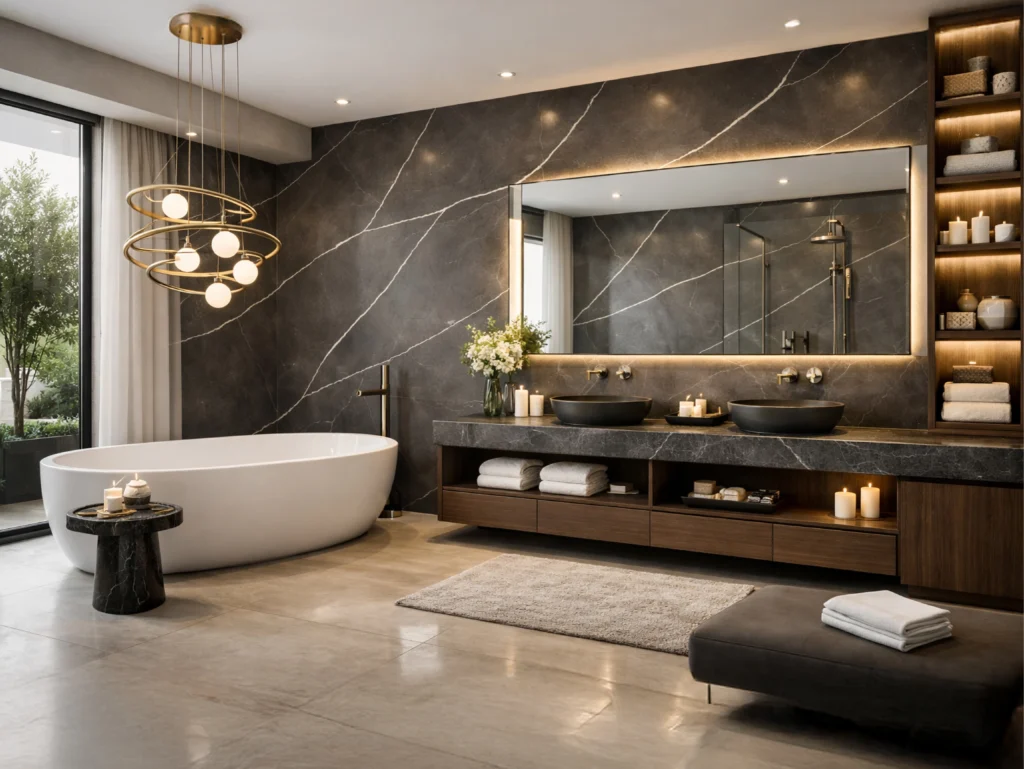
When planning a commercial project—whether it’s a hotel, office space, retail showroom, or premium residential development—every material choice is an investment decision. Beyond aesthetics, developers and project owners look for surfaces that offer durability, consistency, ease of maintenance, and long-term value. One surface that continues to gain attention in commercial spaces is Calacatta Quartz. Known for its bold veining and elegant appearance, Calacatta Quartz is often associated with luxury. But the real question remains: Is it worth the investment for commercial projects? At Triqua Quartz, the answer lies in understanding how Calacatta Quartz performs beyond just looks. Let’s explore why this surface is increasingly chosen for large-scale and high-traffic commercial environments. What Makes Calacatta Quartz Different? Calacatta Quartz is inspired by natural Calacatta marble, famous for its dramatic veining and white base. However, unlike marble, quartz is engineered to overcome the limitations of natural stone. Calacatta Quartz offers: A high-end, marble-like appearance Engineered strength and durability Consistent patterns across slabs Minimal maintenance requirements For commercial projects, this combination of luxury and performance makes Calacatta Quartz especially appealing. 1 . Strong Visual Impact That Elevates Commercial Spaces First impressions matter in commercial environments. Lobbies, reception areas, conference rooms, hotel bathrooms, and premium retail spaces all rely on visual appeal to reflect brand value. Calacatta Quartz instantly delivers: A premium, high-end look Bold veining that adds character Bright, clean surfaces that enhance lighting Timeless design that doesn’t go out of style At Triqua Quartz, Calacatta designs are carefully engineered to maintain visual balance—bold enough to stand out, yet refined enough for professional environments. This helps commercial spaces look upscale without appearing overdesigned. 2 . Durability That Matches Commercial Use Commercial spaces experience far more wear and tear than residential ones. Surfaces must withstand: High foot traffic Frequent cleaning Furniture movement Daily operational use Calacatta Quartz is built for this reality. Unlike natural marble, it resists: Scratches Stains Chipping Surface dullness Triqua Quartz manufactures Calacatta Quartz slabs with high structural integrity, ensuring they maintain both strength and appearance even in demanding commercial settings. 3 . Low Maintenance Saves Time and Cost One of the biggest hidden costs in commercial projects is maintenance. Materials that require frequent sealing, polishing, or special care increase operational expenses over time. Calacatta Quartz requires: No sealing No special cleaning products Simple daily maintenance with soap and water This makes it ideal for hotels, offices, hospitals, and retail spaces where ease of upkeep is essential. Over the lifespan of a project, this low-maintenance advantage significantly improves return on investment. 4 . Non-Porous and Hygienic for Public Spaces Hygiene has become a top priority in commercial design, especially in healthcare, hospitality, and food-related spaces. Calacatta Quartz is non-porous, which means: It does not absorb liquids It resists bacteria and mold growth It maintains surface hygiene easily At Triqua Quartz, every slab is engineered to meet high hygiene standards, making Calacatta Quartz suitable for wash areas, countertops, vanities, and high-touch zones in commercial environments. 5 . Consistency Across Large-Scale Projects One major challenge in commercial projects is maintaining consistency across multiple areas, floors, or even locations. Natural marble often varies from slab to slab, making it difficult to achieve a uniform look. Calacatta Quartz solves this problem by offering: Predictable veining patterns Consistent color tone Uniform thickness and finish Triqua Quartz focuses heavily on batch consistency, ensuring that what is approved during sampling can be reliably delivered throughout the project lifecycle. 6 . Design Flexibility for Different Applications Calacatta Quartz is not limited to one use. In commercial projects, it is commonly applied in: Reception desks Wall cladding Washroom vanities Table tops Pantry and cafeteria counters Its versatility allows designers and developers to use a single material across multiple areas, creating a cohesive design language throughout the project. 8 . Long-Term Value Over Short-Term Cost While Calacatta Quartz may have a higher upfront cost compared to basic surfaces, its long-term value is where it truly stands out. Commercial decision-makers appreciate that: Replacement cycles are reduced Maintenance costs stay low Aesthetic appeal remains intact for years Property value and brand perception increase When viewed as a long-term investment rather than a short-term expense, Calacatta Quartz delivers strong returns—especially when sourced from a reliable manufacturer like Triqua Quartz. Why Triqua Quartz Makes the Difference Not all Calacatta Quartz is the same. The real value comes from how it’s manufactured. Triqua Quartz focuses on: Advanced production technology Controlled design consistency Strong quality checks Reliable supply for large projects This ensures that commercial projects receive quartz surfaces that meet both visual and functional expectations—without surprises. Conclusion So, is Calacatta Quartz worth the investment for commercial projects? The answer is yes—when chosen wisely. Calacatta Quartz offers a rare balance of luxury appearance, durability, hygiene, and low maintenance. For commercial spaces that demand performance without compromising on design, it proves to be a smart and future-ready choice. With Triqua Quartz, developers and project planners gain more than just a beautiful surface. They gain reliability, consistency, and long-term value—making Calacatta Quartz not just an aesthetic decision, but a strategic one. If you’re designing commercial spaces that need to look premium today and perform reliably tomorrow, Calacatta Quartz by Triqua is an investment that truly pays off.
What Developers Look for in a Reliable Quartz Stone Supplier
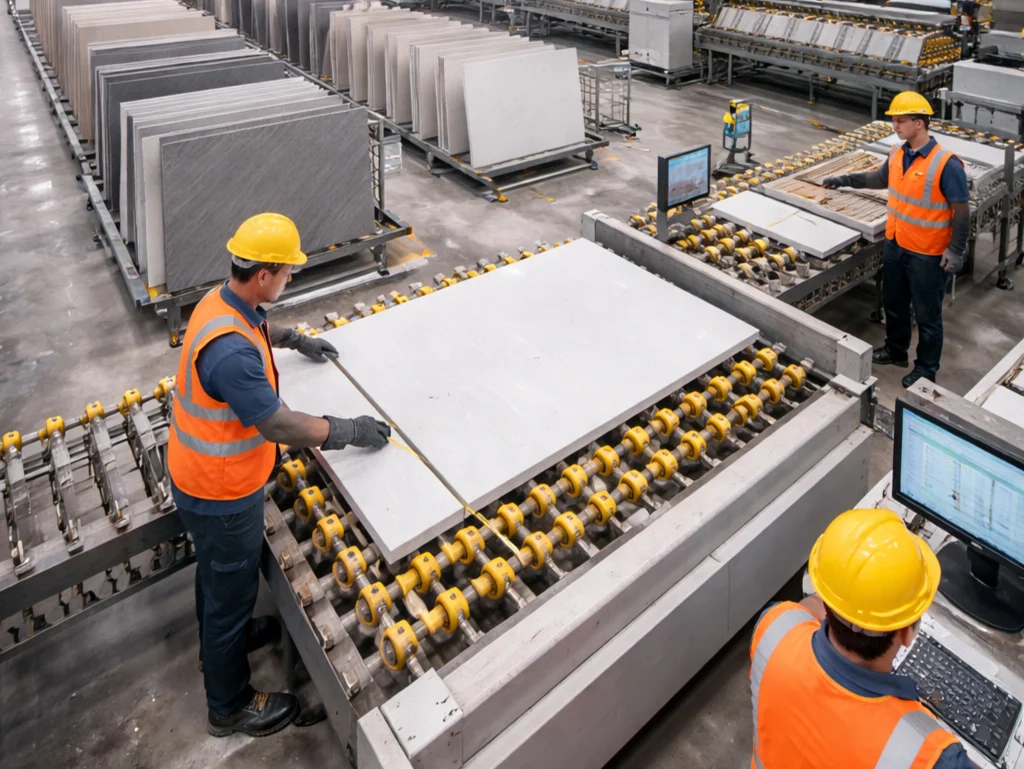
For today’s developers, choosing materials is no longer just about looks. Every decision affects timelines, budgets, quality standards, and long-term reputation. Among all surface materials, quartz stone has become a preferred choice for residential and commercial projects—but only when it comes from a reliable supplier. A dependable quartz stone supplier doesn’t just deliver slabs. They support smooth execution, consistent quality, and predictable outcomes across multiple projects. So what exactly do developers look for when selecting a quartz partner? Let’s break it down in simple terms. 1. Consistent Quality Across Every Batch For developers working on large or multi-phase projects, consistency is critical. One mismatched slab can disrupt the entire visual flow of a space. Developers look for suppliers who can deliver: Uniform color and pattern across batches Consistent thickness and finish No visible variation between early and late deliveries Quartz stone is often used across multiple apartments, floors, or buildings. A reliable supplier ensures that what is approved during sampling is exactly what arrives on-site months later. Consistency builds trust—and trust is everything in large developments. 2. Ability to Handle Volume Without Delays Scale matters. Developers need suppliers who can meet volume requirements without slowing down the project. A strong quartz supplier should be able to: Handle bulk orders smoothly Maintain steady production capacity Commit to realistic delivery timelines Support phased or staggered project schedules Delays in material supply often cause costly project overruns. Developers prefer suppliers who plan ahead, communicate clearly, and deliver on time—every time. 3. Predictable Timelines and Planning Support Developers work with tight schedules. Any uncertainty in material delivery can impact multiple teams—contractors, installers, and interior planners. Reliable quartz suppliers offer: Clear lead times Production planning aligned with project timelines Advance scheduling for repeat orders Transparent communication if timelines shift Suppliers who understand project planning become partners, not just vendors. Developers value suppliers who think ahead rather than react at the last minute. 4. Durable Quartz That Performs Long-Term Quartz stone is chosen not just for appearance, but for performance. Developers want materials that hold up well over time and reduce post-handover issues. They look for quartz that offers: Scratch and stain resistance Non-porous, hygienic surfaces Structural strength for high-traffic areas Minimal maintenance requirements Durable quartz reduces customer complaints, repair costs, and warranty issues after project completion. That long-term reliability directly protects a developer’s brand reputation. 5. Design Variety That Fits Modern Projects Every project is different. From luxury residences to commercial complexes, developers need quartz options that suit various design themes. A good quartz supplier provides: Neutral and minimalist colors Marble-inspired designs like Carrara or Calacatta Contemporary finishes for modern interiors Consistent design availability across project phases Design flexibility allows developers to cater to diverse buyer preferences without changing suppliers mid-project. 6 . Professional Packaging and Safe Delivery Quartz slabs travel long distances and pass through multiple handling points before reaching the site. Poor packaging can lead to breakage, delays, and added costs. Developers prefer suppliers who ensure: Strong, protective packaging Safe handling during transport Reduced risk of damage Reliable logistics coordination When slabs arrive in perfect condition, installation stays on track and wastage is minimized. 7. Transparent Pricing and Cost Stability Budget control is a major concern for developers. Sudden price changes can affect overall project profitability. Reliable quartz suppliers offer: Clear pricing structures Stable pricing for long-term projects No hidden costs or last-minute charges Fair volume-based pricing When pricing is predictable, developers can plan better, quote accurately, and avoid financial surprises. 8 . Compliance and Quality Standards Developers increasingly work across cities, regions, and even countries. This means materials must meet recognized quality and safety standards. A dependable quartz supplier maintains: Standardized quality control processes Documented manufacturing practices Compliance with international norms Traceability for materials These standards ensure the quartz is accepted across markets and meets the expectations of buyers, consultants, and inspectors. 9 . Strong Communication and Responsiveness Problems don’t arise because of materials alone—they arise due to poor communication. Developers value suppliers who: Respond quickly Provide clear updates Offer solutions instead of excuses Maintain transparency at every stage Good communication builds confidence and makes collaboration smoother, especially when projects involve multiple stakeholders. 10 . Long-Term Partnership Mindset Finally, developers don’t want to keep changing suppliers. They look for long-term relationships built on reliability and performance. A supplier becomes valuable when they: Understand the developer’s working style Support multiple projects over time Improve processes with each collaboration Grow alongside the developer’s portfolio Long-term partnerships reduce risk, simplify procurement, and create operational efficiency. Conclusion For developers, choosing a quartz stone supplier is a strategic decision—not just a material purchase. The right supplier brings consistency, reliability, planning support, and long-term value to every project. From quality and scale to timelines, pricing, and communication, developers look for partners who understand the realities of large projects and deliver without surprises. Quartz stone plays a central role in modern construction. But its success in a project depends entirely on the supplier behind it. When reliability meets quality, developers can build with confidence—and that’s what truly drives long-term success.
Inside Export-Ready Quartz Manufacturers: Processes, Planning, Scale

Anyone can ship quartz. Very few manufacturers are truly export-ready. That difference doesn’t show up in a catalog or a sample slab. It shows up months later — when consistency is tested, volumes increase, and expectations rise. At Triqua Quartz, we’ve learned that exporting quartz isn’t about paperwork or ports. It’s about how a factory is built, how decisions are planned, and how growth is controlled. Export readiness is not an action — it’s an operating mindset. This is what truly separates export-ready quartz manufacturers from the rest. Export-Ready Is a Way of Operating Many manufacturers begin exporting when opportunities appear. Export-ready manufacturers design their operations assuming global expectations from day one. That means: No shortcuts in production No batch-to-batch surprises No dependency on individuals instead of systems At Triqua, we believe export readiness is not a phase. It’s a daily standard. 1. Strong Processes Create Predictable Quality Global markets don’t judge quality once. They judge it repeatedly — across shipments, regions, and timelines. Export-ready manufacturers rely on process discipline, not individual effort. This includes: Automated raw material mixing Controlled compression and curing Standardized polishing Multiple quality checks at every stage Why does this matter? Because a slab approved today must match one delivered months later. Only process-driven manufacturing can deliver that level of predictability. At Triqua Quartz, every slab follows a defined production path. This ensures uniform color, thickness, finish, and strength — regardless of order size or destination. 2. Planning Happens Before Production Export challenges usually start with poor planning, not poor production. True export-ready manufacturers plan for: Volume continuity Design repeatability Raw material availability Long-term commitments Instead of producing order by order, planning is done in structured cycles. At Triqua, we plan: By design families, not individual slabs By forecasted demand, not last-minute pressure By production windows, not daily improvisation This allows us to scale smoothly and deliver reliably. Planning isn’t about predicting everything — it’s about being prepared. 3. Scale Without Control Is a Risk Increasing capacity is easy. Maintaining consistency at higher volumes is not. Export-ready scale means: More output without losing finish Faster production without widening tolerances New designs without operational confusion At Triqua Quartz, scale is built gradually: Machines are added only after process stability Designs are launched only after repeatability is proven Growth follows systems, not urgency Because in global markets, one inconsistent shipment can undo years of trust. 4. Logistics Is Part of Product Quality Export-ready manufacturers don’t treat logistics as a handover. They treat it as an extension of manufacturing quality. Quartz slabs travel long distances. They face handling, stacking, humidity, vibration, and time. That’s why export readiness includes: Strong wooden crates Shock-resistant packaging Moisture protection Edge and corner safety Accurate documentation At Triqua, slabs are packed assuming the toughest journey — because quality should arrive exactly as it leaves the factory. 5. Compliance Is Built-In, Not Added Later Global buyers don’t want compliance at the last moment. They want confidence from the beginning. Export-ready manufacturers operate with: Documented processes Traceable batch records International quality standards Clear audit trails At Triqua Quartz, compliance is part of daily operations, not a last-minute checklist. This reduces friction, speeds approvals, and builds long-term trust. 6. Design Must Be Repeatable, Not Just Beautiful In exports, design success isn’t about how good a slab looks once. It’s about how well it can be repeated — consistently. Export-ready manufacturers focus on: Long-term color stability Controlled veining logic Reliable pattern reproduction Triqua’s design philosophy is simple: If it can’t be repeated perfectly, it doesn’t scale globally. This allows partners across regions to maintain visual consistency and brand identity without worrying about variation. Triqua’s Vision: Export as a Standard At Triqua Quartz, our vision is clear: Export readiness is not about reaching new markets. It’s about operating at global standards every single day. We believe the future belongs to manufacturers who: Build systems, not shortcuts Plan growth instead of reacting to pressure Scale with discipline Treat quality as non-negotiable Think long-term, not shipment-to-shipment Where the Industry Is Heading The global quartz industry is evolving. Buyers now demand: Fewer suppliers and deeper partnerships Higher consistency and fewer excuses Long-term reliability over short-term pricing Export-ready manufacturers will define this next phase. Those relying on flexibility without structure will struggle. Those investing in process and planning will lead. Final Thought Export success doesn’t begin at the port. It begins on the factory floor. It begins with how processes are designed, how planning is done, and how scale is controlled. At Triqua Quartz, we don’t prepare for export. We operate for export — every slab, every batch, every day. Because in global markets, consistency is the only advantage that truly compounds.
Why Quartz Stone Countertops Are Powering the Next Generation of Large-Scale Commercial Spaces
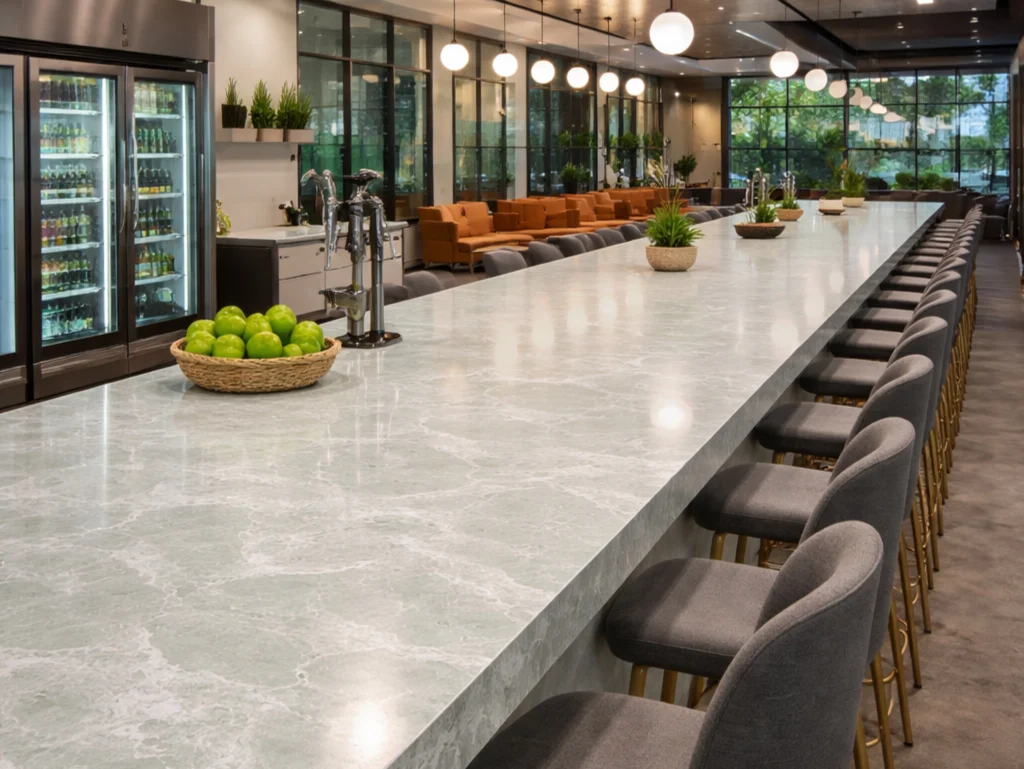
The real question isn’t why quartz is everywhere. It’s why serious commercial projects refuse to build without it. Airports. Hotels. Hospitals. Corporate offices. Retail chains. When spaces operate at scale, surfaces stop being decorative choices—and start becoming operational decisions. That’s exactly where Quartz Stone Countertops have earned their place. At Triqua Quartz, we don’t see quartz as just a material. We see it as infrastructure—engineered to support performance, hygiene, longevity, and brand experience in high-traffic commercial environments. This article breaks down why quartz has become the backbone of large-scale commercial applications, and what forward-looking projects must consider when choosing surfaces today. Commercial Spaces Demand More Than Aesthetics In residential design, surfaces are judged by beauty. In commercial design, surfaces are judged by failure points. Will it stain under daily use? Will it crack under load and vibration? Will it age unevenly across hundreds of square meters? Will maintenance disrupt operations? Will hygiene standards hold up over time? Natural stones often struggle here—not because they lack beauty, but because they weren’t engineered for scale. 1. Engineered Consistency Is Non-Negotiable at Scale Large commercial projects don’t install one countertop. They install hundreds—sometimes thousands—of square meters across locations. Consistency isn’t a preference. It’s a requirement. Quartz delivers: Uniform color and veining across batches Predictable thickness and density Zero surprises between sample approval and final installation At Triqua Quartz, every slab is engineered under controlled conditions, ensuring visual and structural consistency from the first shipment to the last. This is why quartz works where natural stone often fails: scale exposes inconsistency—and quartz eliminates it. 2. Hygiene Is No Longer a Feature. It’s a Baseline. Commercial environments today operate under intense scrutiny—especially healthcare, hospitality, food service, and retail. Quartz is non-porous by design. That single characteristic changes everything. It means: No absorption of liquids No breeding ground for bacteria No mold or mildew penetration No need for sealing or resealing cycles In environments where downtime costs money and hygiene affects trust, Quartz Stone Countertops quietly become one of the most reliable risk-management tools. This is not about convenience. This is about compliance, reputation, and uninterrupted operations. 3. Durability That Matches Commercial Wear Cycles Commercial spaces don’t experience “use.” They experience continuous load. Quartz performs because it’s built for that reality: High resistance to scratches and abrasion Structural strength against impact and heavy fixtures Stability under temperature variation Long lifecycle with minimal degradation At Triqua, durability isn’t tested in isolation. It’s tested against real commercial conditions—foot traffic, cleaning chemicals, equipment movement, and daily stress. A surface that needs replacement every few years isn’t a premium surface. It’s a hidden cost. 4. Maintenance Economics Matter More Than Material Cost Here’s an uncomfortable truth many projects learn late: The cheapest surface upfront often becomes the most expensive surface long-term. Quartz changes the math. No sealing contracts No specialized cleaners No frequent refinishing No operational shutdowns for upkeep For multi-location brands and large facilities, this translates into: Lower lifecycle cost Predictable maintenance budgets Fewer operational disruptions Quartz doesn’t just save money—it protects operational continuity. 5. Design Flexibility Without Operational Compromise Commercial architecture today must balance brand identity with function. Quartz enables that balance: Marble-inspired aesthetics without fragility Minimalist, monolithic surfaces for modern spaces Large-format slabs that reduce joints and visual clutter Custom finishes aligned with brand palettes At Triqua Quartz, we design surfaces not just to look premium—but to stay premium under pressure. Because in commercial environments, beauty that degrades quickly damages brand perception. Triqua’s Perspective: Quartz as Commercial Infrastructure Our vision at Triqua is simple: Quartz is no longer a finished material. It is part of a building’s operating system. That’s why we focus on: Engineering precision, not just aesthetics Batch consistency, not one-off beauty Scalable supply, not limited availability Global standards, not local shortcuts We work with partners who understand that large-scale projects succeed when materials are predictable, resilient, and designed for the long term. Where Commercial Design Is Headed Next Looking ahead, the demand for quartz in commercial spaces will only accelerate—driven by: Stricter hygiene regulations Faster project timelines Higher expectations of durability Greater emphasis on lifecycle cost Consistent brand experience across locations Materials that can’t scale—technically or operationally—will be left behind. Quartz won’t. Final Thought Quartz Stone Countertops didn’t become the standard for large-scale commercial applications by trend. They earned it by performance. At Triqua Quartz, we believe the future of commercial design belongs to materials that work silently in the background—supporting operations, protecting brands, and lasting far beyond the initial install. That’s the role quartz now plays. And that’s the standard we build toward every day.